Blog
The personal “why” that sustains a founder
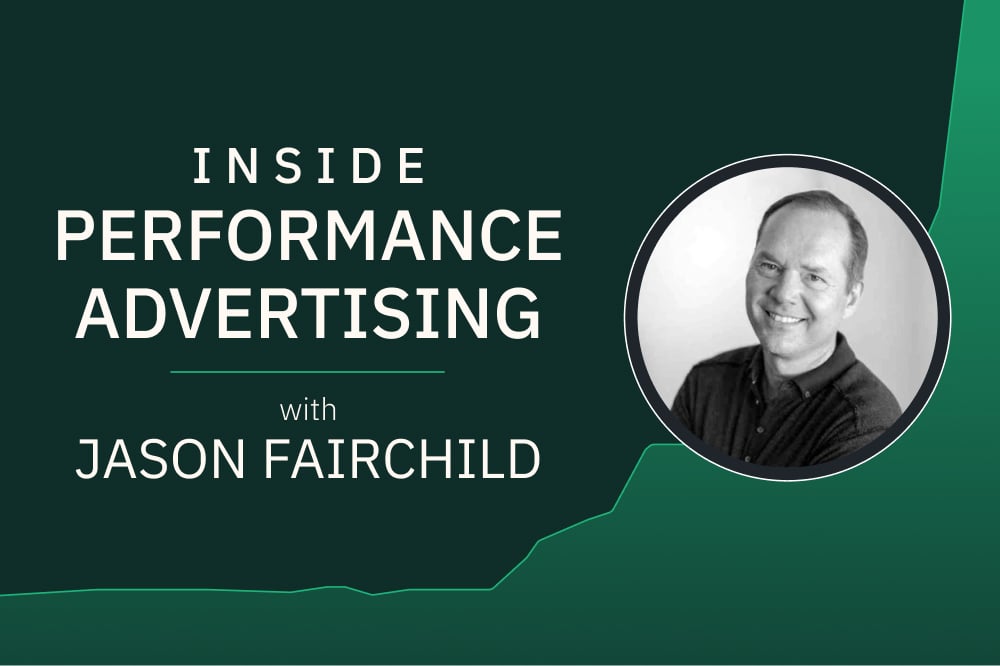
After more than 25 years building and testing new growth channels, Jason Fairchild shares the mindset and skills that separate elite growth marketers from everyone else.
Nov 4, 2026 · 6 min read
People often ask me how to know whether they should start a company.
They expect an answer about the market: Is the category growing? Is there enough customer demand? Can you raise money? Is the timing right? Those questions matter. A great idea in the wrong market or at the wrong moment can fail before it ever has a chance to prove itself.
But I think there are foundational questions to clear before jumping into a new venture that could become a very long journey. Starting a company is a commitment to relentless uncertainty, pressure, and a pace that makes most conventional jobs look calm by comparison. And it’s an always-on job… during your children’s birthdays, while you are on vacation, and on your anniversary. It doesn’t ever stop. It truly is a way of life.
So my advice is to ask yourself a more personal question: Why do you want this life? And are you prepared for it for the foreseeable future?
Living on a knife’s edge
This way of life is more than long hours and interrupted vacations. You are signing up to make consequential decisions with incomplete information and keep moving when the distance between where you are and where you need to be seems impossible. You are signing up to deliver sustained growth at rates that are irrational by any reasonable corporate standard. You are signing up to deal with existential crises, when the company hangs in the balance and depends on your ability to navigate with a cool head.
You are also signing up to be the rock of certainty for your team members and investors. The company vision requires absolute certainty and clarity, even during moments when that can be hard to find (especially during those moments). Startup life means living on a knife’s edge on a sustained basis, which I think brings out the very best in human nature. You certainly feel fully alive and alert.
The difficult periods have a way of exposing whether your motivation has its limits. When a big customer churns, or an exec leaves unexpectedly, or any one of a hundred other crises emerges—and they will—you need to be anchored to something deep when the “success” you imagined is nowhere in sight.
A company mission is not the same as a founder’s why
Every company needs a clear mission. It gives employees, customers, and investors a common understanding of what the business is trying to accomplish. It helps people make decisions and creates alignment when the organization starts to grow.
A founder’s why is more personal. It might be a problem you can’t stop thinking about or the instinct to build something that does not yet exist. Alternatively, it might be a deep interest in a part of the world that is changing quickly enough to create new possibilities. Or a deep need to prove yourself. It may be different for each founder.
For me, I have always been drawn to the edge of technological change, when some wave of innovation starts to create entirely new ways to solve large problems. And there’s an energy about new categories that is palpable–you can feel it. The pull of that energy led me into the internet space originally, then digital advertising, paid search, programmatic, and eventually Performance TV.
There is no single “right” answer for why you start a company. The important thing is that you have an internal source of energy that carries you through the good times and the bad, and makes the difficult work worth doing.
The plan will break. The reason has to survive.
Founders need conviction, and they also need to be willing to change their minds.
That tension is central to building any company. You need enough belief in your vision to take the first step before everything is certain. At the same time, you need enough humility to recognize when the market, the customer, or the data is telling you something different from what you expected. Because it never happens as you expect. As Mike Tyson famously put it, everyone has a plan until they get punched in the face.
Your product will probably change, as will your go-to-market strategy. The people around the table may change. In some cases, the original problem itself becomes clearer or alters only after you have spent time trying to solve it.
The founders who get stuck often confuse commitment with attachment to their first idea. They defend the original plan because changing course feels like admitting they were wrong. We’ve seen this play out in a leading DSP/adtech company, and I have empathy for the founder because you got to where you are by being 100% certain where others are not, and it’s difficult to change course in that context. It takes humility, a willingness to calibrate your thinking with others, curiosity, and the application of the cold, hard scientific method that mandates the death of one's ego.
If you care about building a category-defining company, you have to accept that the path may look very different from the one you first drew out. And you have to accept that people are generally resistant to change, so your “new” idea will require lots of energy and perseverance to gain traction. Even after it does, the company will need to keep evolving. Microsoft and Apple are very different companies now than they were in 1995.
The question to answer before the pitch deck
Before you write your deck, choose a name, or start talking about a seed round, ask yourself: Am I convinced to the core of my being that this is a problem I want to invest my life’s energy in solving? And am I fully prepared for the start-up way of life?
Inside Performance Advertising with Jason Fairchild delivers unfiltered insights, strategic perspective, and hard truths from inside the evolving world of adtech—cutting through the noise to focus on what really drives outcomes. Subscribe here.