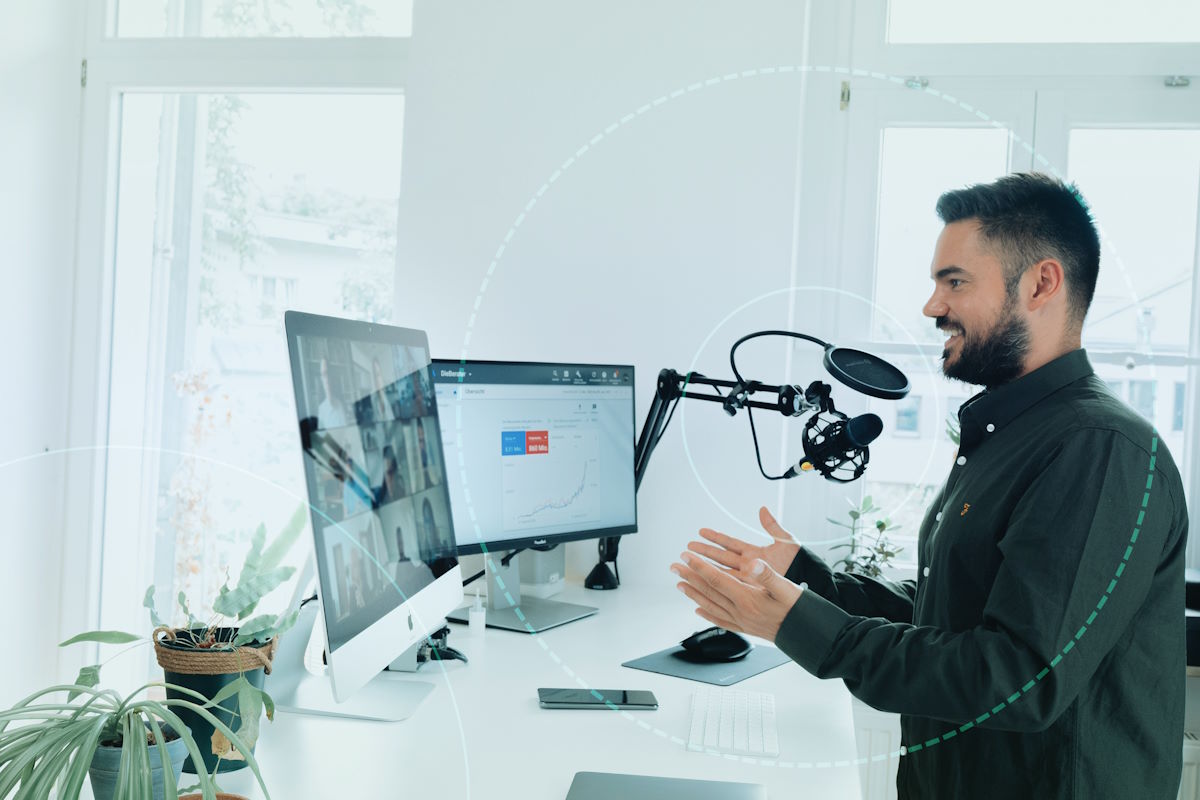
Last week our team spent several days at Shoptalk in Las Vegas, meeting with brands, retailers, and agencies navigating one of the fastest-moving periods in retail.
We love events like Shoptalk because they compress hundreds of conversations into a few days. When the same themes surface again and again across different companies, you start to see where the market is actually heading.
This year, three ideas came up repeatedly.
None of them were particularly surprising, but together, they point to a clear shift in how retail marketers are thinking about growth.
1. Measurement is no longer optional
For years, TV was treated as a brand channel. Retail marketers expected reach and awareness, but not necessarily measurable outcomes. That mindset is changing quickly.
Many of the conversations we had at Shoptalk centered around how to make TV accountable the same way search and social are. Retail marketers today are operating in a performance environment. Every channel is being evaluated against outcomes like revenue, customer acquisition, and incremental sales.
What also became clear in these conversations is that measurement itself is now under scrutiny. On top of reporting, marketers want to understand how measurement is being done.
In some cases, measurement is provided directly by platforms. In others, it’s handled by third-party providers. Both models can work, but only if there is a high degree of transparency. Marketers increasingly expect to be able to understand the logic and validate the results at a granular level.
But measurement doesn’t always work like that today. Some measurement providers determine attribution across multiple partners but don’t share their logic with the marketers themselves. That model would be unacceptable in other performance channels, but has somehow persisted.
And increasingly, marketers are recognizing the risk of relying too heavily on a small number of opaque, dominant platforms that can report performance without fully exposing how that performance is measured. One of the clearest messages at Shoptalk was that brands want a more transparent, more measurable media mix, not a deeper dependency on black-box systems.
As more retail budgets shift into streaming and Connected TV, marketers expect TV to operate within the same performance framework as the rest of the media mix, which means deterministic measurement, clear attribution models, and the ability to connect exposure to actual business outcomes.
The days when TV could sit outside that system are ending.
2. AI is becoming operational
AI was everywhere at Shoptalk, but the tone of the conversation has shifted.
A year or two ago, most discussions about AI were conceptual: how it might change retail in the near future or how it might influence marketing someday. Now the conversation is far more practical.
Brands are asking how AI can help them optimize media faster, process more signals, and improve performance without increasing operational complexity. In advertising specifically, this means systems that can continuously evaluate creative, audience signals, and media context to drive better outcomes.
The opportunity is in the ability to operate performance channels at a scale that would be impossible manually.
3. Retailers and brands are thinking more about the full journey
Another theme that surfaced repeatedly is the idea that media needs to connect to the entire shopping journey.
Retail marketers are increasingly looking at how upper-funnel channels like TV influence downstream behavior, including everything from site visits to store traffic to purchases. This is particularly relevant as commerce becomes more fragmented across retail media networks, marketplaces, and direct-to-consumer channels.
Understanding how each channel contributes to that journey is becoming a competitive advantage. TV, when measured properly, can play a much more direct role in that system than it historically has.
That starts with tying TV impressions to actions like site visits, transactions, and customer acquisition. It also requires a consistent measurement layer across channels, so marketers can evaluate performance using the same set of outcomes, rather than stitching together disconnected reports after the fact.
And increasingly, it depends on ingesting more signals, whether that’s commerce data or offline conversion events, to better understand how media is influencing behavior over time.
When those pieces come together, TV can be evaluated alongside other performance channels, as part of a unified system driving measurable growth.
The performance shift in retail marketing
At the most basic level, retail marketers are trying to drive sales. And the marketing discipline most directly tied to driving sales is performance advertising.
That framing is becoming more explicit.
The conversations at Shoptalk reflected a broader shift: Retail marketing is being reoriented around measurable outcomes.
Budgets are increasingly allocated based on revenue and customer acquisition, channels that once operated outside of performance frameworks are now being pulled into them, and technologies like AI are accelerating that shift by making optimization and measurement more scalable.
For TV, this represents a fundamental evolution. As streaming continues to grow and measurement improves, TV is becoming part of the performance stack.
And for many of the brands we spoke with last week, that transition is already underway.
Inside Performance Advertising with Jason Fairchild delivers unfiltered insights, strategic perspective, and hard truths from inside the evolving world of adtech—cutting through the noise to focus on what really drives outcomes. Subscribe here.