I'm writing this fresh off a week on the Croisette, still slightly hoarse and more convinced than ever that this industry is at an inflection point it doesn't quite have the vocabulary for yet. Cannes Lions is an interesting place to take the temperature of advertising. It is, by design, a celebration of the creative craft, which means it self-selects for a certain kind of optimism.
But this year, underneath all of that, there was a harder edge to the conversations happening all around. On top of asking what great advertising looks like, people were asking whether they could prove it was working. And that's the right question, if you ask me.
The most interesting AI story
You couldn’t walk ten feet this week without running into a session or beach activation with "AI" somewhere in the title. I get it. AI is genuinely transforming what's possible in campaign automation, audience segmentation, and even creative production. The technology and the implications are significant. But there was a pattern to the AI conversation at Cannes worth naming: A majority of it was about the front end. That includes making content faster or making ads cheaper to produce.
That's fine as far as it goes. But generating an ad has never been the hard part. Making an ad perform has always been the challenge. The industry's excitement about AI-generated creative is a little like getting excited that your new car has great paint. Good. Now let's talk about the engine, the part responsible for delivering the core functionality of the vehicle – getting us from point A to point B.
What really excites me about AI and what I think is still underappreciated even after a week on the Croisette is what it can do on the optimization side. We're talking about AI that can react to conversion and revenue signals in real time rather than optimizing for non-outcome related delivery or awareness metrics.
Performance stories are still fighting for their fair share of the spotlight at a festival that has historically rewarded craft over accountability, and that's where the more interesting AI conversation lives.
The measurement conversation is growing up
That shift was hard to miss in the side conversations all week. Every brand marketer and media buyer I talked to seemed to be wrestling with some version of the same question, and it wasn't about measurement mechanics.
The people at Cannes were focused on harder topics: “How do I know which part of my media mix actually moved the needle?” “How do I defend a CTV investment when my CFO wants last-click or ROI proof?” and “How do I connect a creative decision to a business outcome?” Those are exactly the right questions, and the fact that they're being vocalized at Cannes, the home of the craft, signals a shift in the industry’s priorities.
What kept coming up, in one form or another, is that incrementality is a discipline that forces harder questions, not just a methodology you bolt on after the fact. Knowing your ads ran is not the same as knowing they worked, and more advertisers are starting to feel the gap between the two.
Intent is the most underpriced signal in advertising
One thing this week reinforced for me is that the industry is becoming much more interested in intent as a strategic advantage. A lot of the conversations around the tvScientific by Pinterest story naturally evolved into a discussion about how marketers can reach consumers earlier in the decision-making process, before a purchase decision has already been made. Attribution and incrementality can tell you what worked after the fact, but the smarter opportunity is upstream, before a consumer has committed to a category decision. That's where the leverage is, and it's where I think the industry has the most room to grow.
The most important distinction is between data that reflects what someone has done and data that reflects what they're about to do. Most digital advertising has been built on the former because that data was abundant, cheap, and easy to activate. But abundant and cheap doesn't mean valuable. The advertisers separating themselves right now are the ones who've figured out how to reach consumers in the planning window, before the decision is made rather than after it.
What kept coming back to me all week is how much this changes the role TV can play in a world where discovery, consideration, and conversion are increasingly connected. Advertisers no longer want channels operating in isolation. They want systems that can connect consumer intent, media exposure, and business outcomes. That's a very different role than TV has historically played, and it's one that creates significantly more opportunity for marketers willing to rethink how they measure success.
The brand vs. performance divide is aging
I've been arguing for years that the distinction between brand and performance is far less useful than the industry pretends it is. It mostly exists to protect agency structures and justify siloed budgets, not because it reflects how consumers actually move through the world. This week on the Croisette, I felt that argument starting to win without me having to make it.
The conversations that generated the most real engagement were asking, "How do we know great creative is working?" That's a meaningful shift. Measurable, attributable, defensible-to-a-CFO effectiveness was a live theme in a way that felt less performative than in years past. The question of how creativity drives growth was being asked in rooms that used to treat it as beside the point.
The advertisers driving ahead think in terms of the customer journey and work backwards: where is attention, intent, and the conversion opportunity, and which media answers each of those questions best. TV has historically been the awareness answer. TV is becoming the performance answer for marketers willing to run it that way.
What Cannes confirmed
Cannes is, among other things, a stress test for ideas. You spend a week putting your thinking in front of smart, skeptical people from all over the world and you find out which arguments hold.
Here's what I came back more sure of than when I landed: the convergence of high-intent audience data and CTV performance is no longer a niche story. It's becoming a mainstream story, told in the language CMOs are already speaking. The advertisers who get there first are going to have a structural advantage.
The other thing I'm taking back is a renewed sense of urgency about accountability. Cannes gave a lot of airtime to creativity this week, as it always does. It also gave airtime to the infrastructure that makes creativity defensible when budgets get cut. Incrementality, causal attribution, and outcome-based buying are the difference between advertising that survives the next planning cycle and advertising that gets cut the moment the economy sneezes.
The most beautiful ad in the world is only as valuable as the business result it drives. The Croisette is getting closer to agreeing, and that's progress.
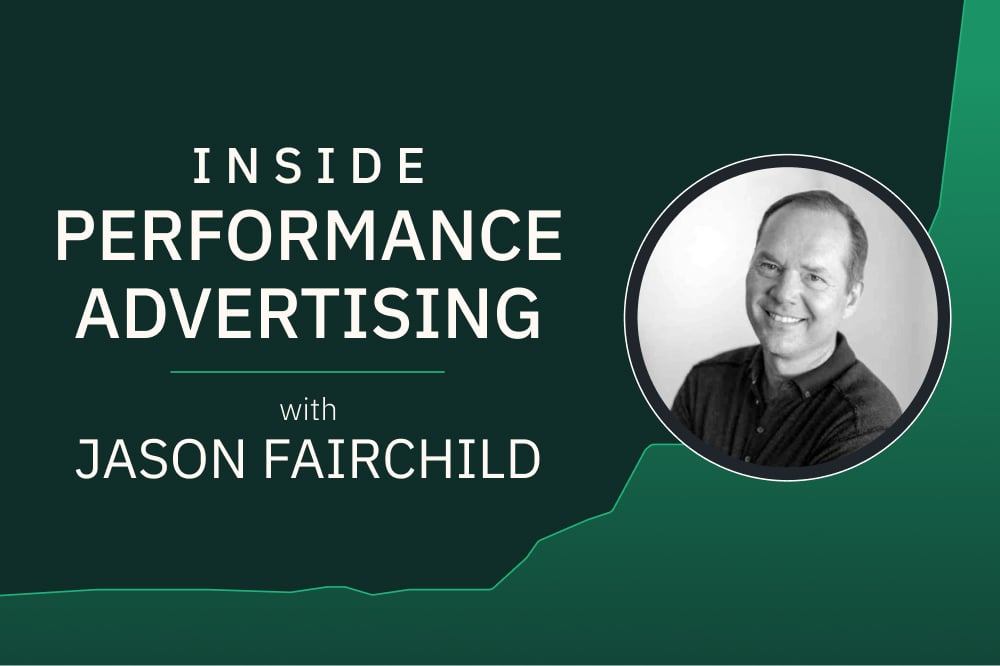
Inside Performance Advertising with Jason Fairchild delivers unfiltered insights, strategic perspective, and hard truths from inside the evolving world of adtech—cutting through the noise to focus on what really drives outcomes. Subscribe here.