For years, the story about TV was simple: cable was fading, streaming was rising, and advertisers needed to adapt. That story is now too narrow.
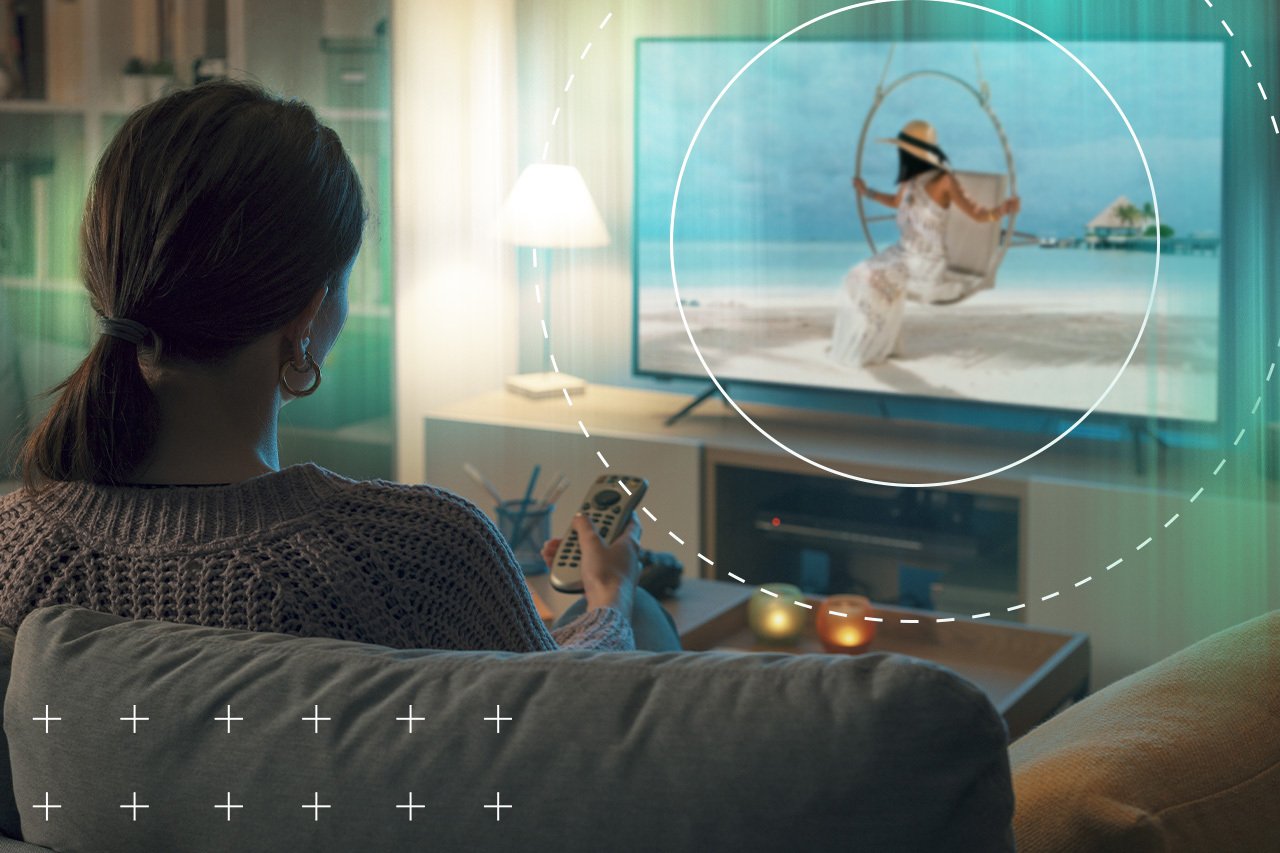
TV remains one of the most powerful media environments in the world. But the way people experience TV has fundamentally changed. It is no longer limited to a living room screen or a single viewing moment. Today, consumers move fluidly between streaming apps, smart TVs, phones, and second screens, making TV part of a broader journey of discovery, research, and purchase.1
And for marketers, that shift is creating a clearer playbook for what TV can do next:
📱 The biggest screen now drives action on the smallest
🔄 The consumer shift your TV strategy needs to catch
📊 See TV impact more clearly across the funnel
🤝 Integrate TV into your affiliate program
The biggest screen now drives action on the smallest
Today’s dual-screen reality has turned TV into an always-connected, action-ready moment. 78% of consumers scroll social media while watching TV, 69% browse online shopping, and 68% look up a product they saw in an ad.1 Watching TV is no longer a single-screen experience. It is ambient, mobile, and deeply intertwined with how people shop, search, and communicate.
What this means for advertisers
TV should no longer be planned in isolation. As consumers move from TV to search, social, and shopping in real time, advertisers need a cross-screen strategy built around measurable action. That means aligning TV with the rest of the media mix, measuring what happens after exposure, and using TV not just to build awareness, but to drive outcomes you can prove.
The consumer shift your TV strategy needs to catch
TV is a direct driver of purchase behavior
65% of consumers say they have made a purchase after seeing a TV ad, according to our first-ever 2026 Consumer Trends Report.
Connecting intent-rich Pinterest signals
Our CEO Jason Fairchild explains how tvScientific by Pinterest is helping move TV from a legacy awareness channel to a measurable performance engine.
There’s no such thing as primetime anymore
Dive into why the old playbook for TV no longer reflects how consumers actually discover and buy.
See TV’s impact more clearly across the funnel
Meet tvScientific by Pinterest
Join tvScientific by Pinterest on June 9 to see first-hand how advertisers drive outcomes on TV.
When the simplest answer is the right one
Our CEO dives into how the spike lift test demonstrates the irrefutable impact of TV advertising.
Integrate TV into your affiliate program
Affiliate programs do not grow stronger when channels are managed in isolation. 📈
That is what makes the partnership between tvScientific by Pinterest and Awin so impactful. Together, we help brands connect TV and affiliate in one clear, measurable performance picture.
With this integration, advertisers can:
📊 Capture CTV‑driven conversions within Awin’s network analytics
🔁 Optimize CTV performance across their partner ecosystem
📈 Gain transparent, cross‑channel performance insights to guide growth
Dive into the new blog from Vikki Danielson, Director of Growth and Partnerships at tvScientific by Pinterest, and Joris Cretien, VP Publisher Development US at Awin, to see how this partnership is creating a more connected way to grow.
As consumers move fluidly across TV, social, search, and shopping, the old TV playbook is giving way to something more connected and more accountable.
That shift is creating new opportunities for marketers to treat TV not as a silo, but as a measurable driver of discovery, action, and growth.
That is where Performance TV is getting more powerful, and why the teams leaning in now will be better positioned to pull ahead.
Happy advertising!
Sources:
1 - tvScientific by Pinterest 2026 Consumer Trends Report, United States, April 2026
2 - tvScientific by Pinterest Internal Data, US, 3/27/26 - 4/7/26. N= >300 advertisers. Outcomes evaluated were purchases, website visits, installs, and registration.